



Street Symphony was born from a simple question:
What would happen if professional musicians brought the same commitment they bring to concert halls into shelters, jails, and clinics?
In 2010, violinist Vijay Gupta—then a member of the Los Angeles Philharmonic—began exploring how music might reach people living outside the walls of traditional performance spaces. The spark came from his friendship with Nathaniel Ayers, a Juilliard-trained musician living with schizophrenia whose story was chronicled by journalist Steve Lopez in The Soloist. Through Nathaniel, Vijay saw how music could remain a lifeline even amid homelessness and mental illness. That friendship became the seed of Street Symphony: a project grounded in dignity, listening, and shared humanity.
At first, there was no staff, no budget—only musicians who believed that music could serve as connection rather than charity. Vijay began cold-calling shelters and clinics across downtown Los Angeles, asking if he and a few colleagues might come and play. Many declined. A few said yes. Those early visits were intimate: a violin, a viola, maybe a string quartet. People walked in and out. Some covered their ears. Others sang back.
That moment—people singing back from inside shelters and jails—defined everything that followed. Street Symphony was never meant to be a performance delivered to an audience, but a relationship built with one.

“The healing doesn’t only happen in one direction. We as artists are changed every time we show up.”
By 2011, Street Symphony had formalized as a nonprofit organization, building partnerships with service providers on Skid Row and throughout Los Angeles County. The mission was clear: to bring world-class musicians into spaces of incarceration, homelessness, and recovery—and to return, consistently, to the same places so that genuine relationships could form.
Over time, those relationships changed both the musicians and the communities they served. As the work grew, musicians from the LA Philharmonic and beyond joined in. Concerts multiplied across clinics, missions, and recovery centers. As Vijay later told Strings Magazine, “The healing doesn’t only happen in one direction. We as artists are changed every time we show up.”
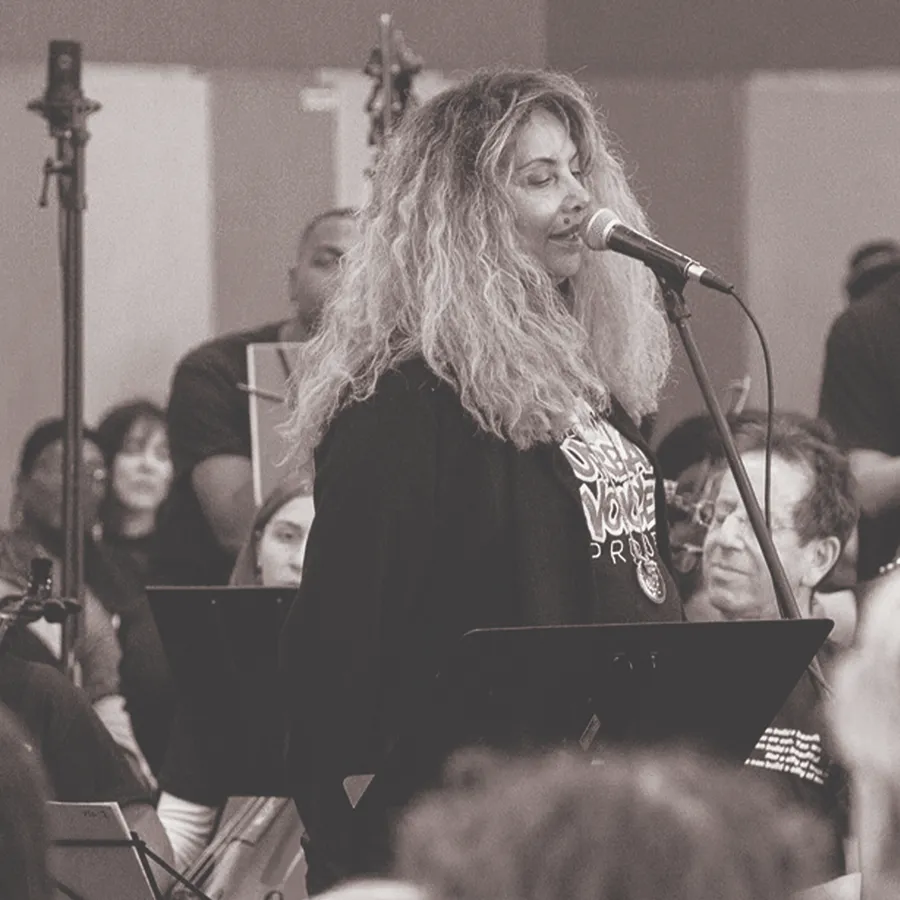
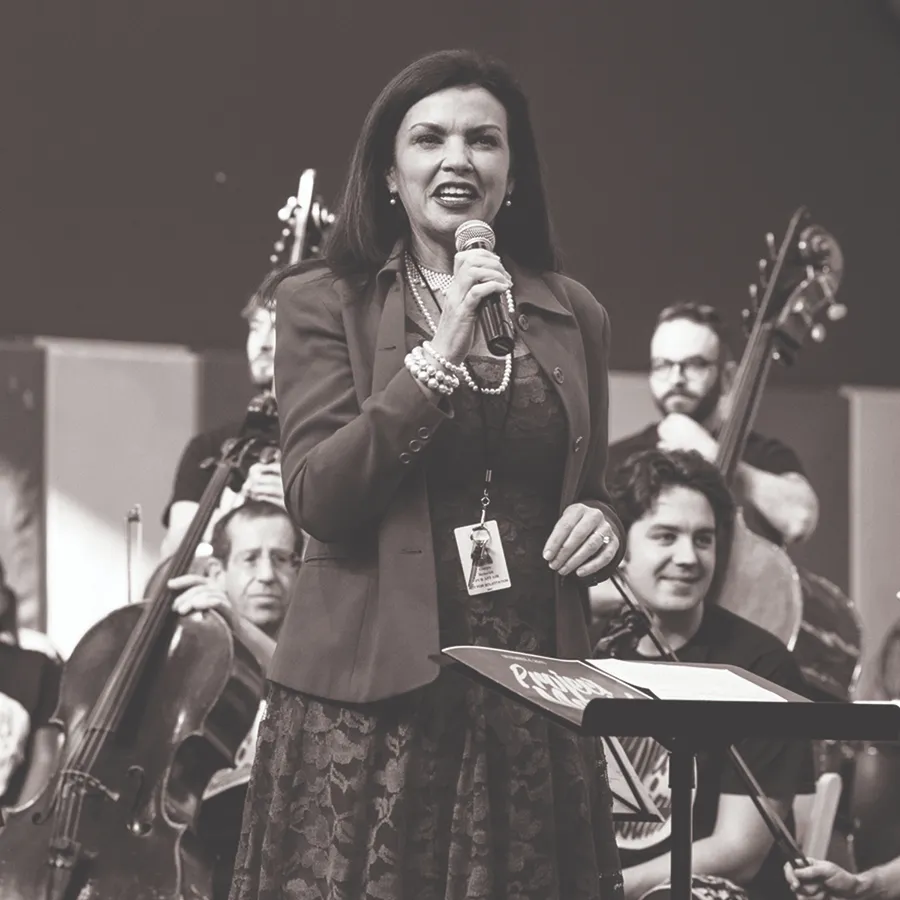

By the mid-2010s, Street Symphony had established a steady rhythm of residencies in shelters, transitional housing, and correctional facilities. The focus shifted from one-time performances to long-term collaboration. At the Downtown Women’s Center, a songwriting circle took shape. At the Midnight Mission, a chamber ensemble—now known as Midnight Strings—was formed. In the county jails, string players, singers, and composers began mentoring incarcerated artists who were writing their own music.
The Yale ISM Review described Street Symphony’s work as “a reversal of the concert hall hierarchy—audience and performer meeting on equal ground.” That sense of equality is most visible in Street Symphony’s signature event: the annual Messiah Project.
Each December, hundreds of people gather in the heart of Skid Row to perform Handel’s Messiah together—professional musicians, residents, and community members side by side. For many participants, it’s the first time they’ve been seen and heard not as clients or case numbers, but as artists. As one singer said, “For the first time in years, I wasn’t invisible.”
The Messiah Project has since grown into a full collaboration between the Skid Row community and professional artists. It now includes original songs, spoken-word performances, and visual art. The goal is not perfection—it’s participation.
From those beginnings, Street Symphony has now presented more than 3,000 performances and workshops across Los Angeles. Its core programs include Women’s Voices, a songwriting and mentorship series led by survivors of homelessness and trauma; Midnight Strings, a chamber-music residency at the Midnight Mission; and Music for Change, a project inside the Los Angeles County jails that brings together professional musicians and incarcerated artists for shared rehearsals and performances.
Every Street Symphony program operates on the same principle: relationship before repertoire. As Vijay said in an interview with NPR’s Deceptive Cadence, “We don’t show up to perform at people; we play with them, in harmony with their lives.”
“We don’t show up to perform at people; we play with them, in harmony with their lives.”
That philosophy has redefined what it means to be a professional artist in Los Angeles. Musicians learn from the resilience and creativity of the communities they serve. Participants gain access to the tools of rehearsal, discipline, and self-expression. The exchange is mutual, ongoing, and human.

Street symphony today
Your support of Street Symphony delivers free, high-quality music programs in shelters, clinics, and jails across Los Angeles.
Your gift allows professional artists to show up consistently in places where people are often ignored. Weekly workshops in voice, strings, songwriting, and mindfulness help participants build focus, regulate stress, practice discipline, and reconnect with their own agency. This work reduces isolation, strengthens community bonds, and supports people navigating homelessness, recovery, and reentry.
Your support also strengthens long-standing partnerships with frontline organizations so that music is integrated into broader systems of care, not treated as entertainment or a one-time event.
When you give to Street Symphony, you are helping to end apathy. You make it possible for people who are written off by society to be seen, heard, and supported through real relationships and steady creative practice. You fund programs that rebuild confidence, restore dignity, and remind people that their lives matter.